A disabled car in Atlanta may need to reach McDonough, Woodstock, or farther. That trip needs a route-specific quote, not a borrowed per-mile rate. Get the operator’s written terms before the truck rolls.
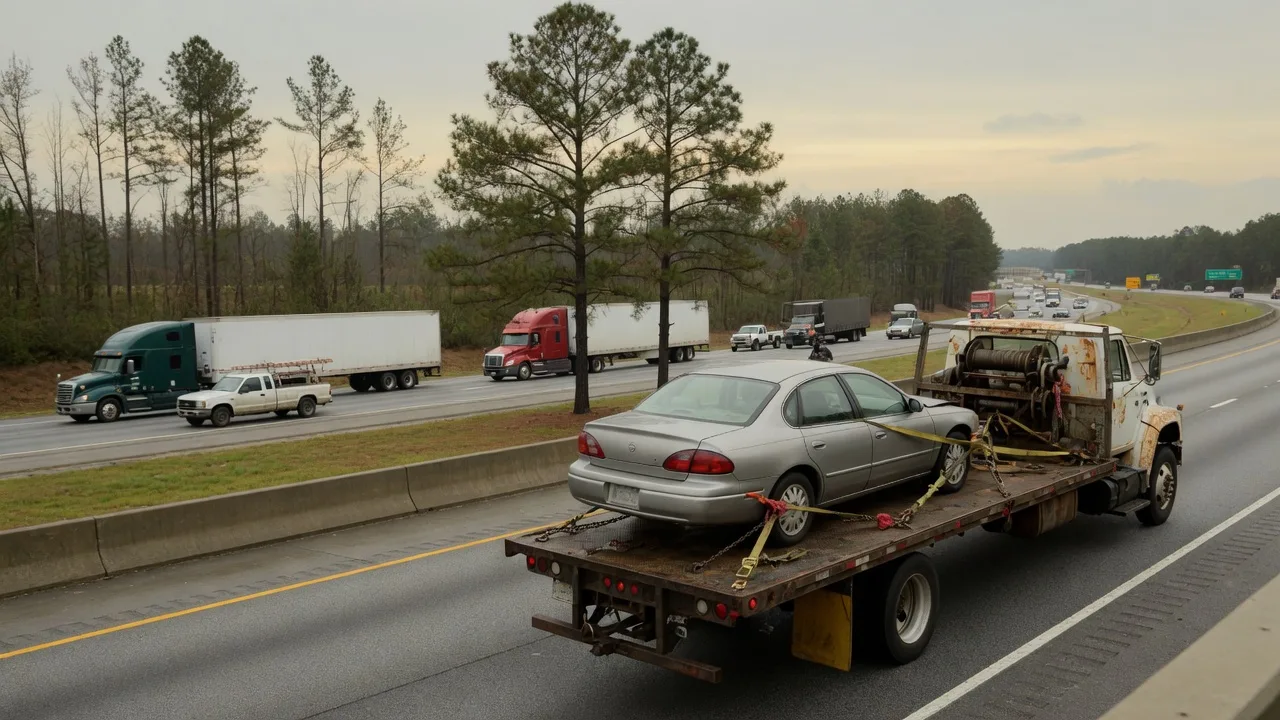
When a local tow becomes a long haul
A local tow often ends at a nearby repair shop. A long haul crosses several communities or reaches the metro’s outer ring. The difference matters because distance becomes only one part of the job.
A driver near the Downtown Connector might need a shop in Marietta. Someone stranded in Stockbridge may need the car returned to a mechanic near home. Another driver could be moving an inoperable vehicle from Atlanta to Woodstock. Each request creates a different route and pickup plan.
Quick Tow Atlanta is a referral service. We match drivers with independent licensed tow operators. We don’t own trucks, set towing prices, or perform the tow.
Our long-distance towing service covers Atlanta’s five core counties and the outer ring. That includes Fulton, DeKalb, Cobb, Gwinnett, Clayton, Cherokee, and Henry counties. Douglas, Rockdale, Fayette, and Paulding are also within the long-haul area.
The key distinction is consent. A driver-requested long haul is a consensual tow. It isn’t an Atlanta police impound or a private-property removal. The driver chooses the destination and authorizes the operator to move the vehicle.
That means the police-tow cap and private-property tariff don’t become long-distance prices. A consensual roadside tow has no statutory rate cap listed in the approved Georgia sources. The operator sets the quote before dispatch.
If you’re still comparing nearby options, our guide to tow cost in Atlanta explains the three towing situations. For a long haul, focus on the exact pickup, destination, vehicle, and access conditions.
I-75 south to McDonough and north through Marietta
I-75 ties Atlanta to two common long-haul directions. Southbound requests often pass through Clayton County toward Stockbridge and McDonough. Northbound trips move through the Brookwood split, Cobb County, and Marietta.
“Atlanta to McDonough” still isn’t a complete route. A pickup near Hartsfield-Jackson differs from one near Buckhead or the Grady Curve. The destination may also sit away from the interstate. Dispatch needs both street locations, not just city names.
The same applies northbound. A car near Downtown Atlanta may need delivery to Marietta. Another may start west of I-285 and travel to the same city. Those trips can use different access points and create different loading conditions.
Tell dispatch which direction your vehicle faces. Mention whether it’s on a shoulder, in a garage, behind a gate, or inside a repair lot. Share any clearance restrictions before an operator accepts the job.
If traffic is moving around you, personal safety comes first. Don’t stand between the vehicle and an active lane. Move away from traffic when you can do so safely. Call 911 when there’s an immediate danger, injury, fire, or blocked travel lane.
GDOT HERO patrols metro Atlanta freeways and helps clear hazards. HERO doesn’t tow vehicles to repair shops. You’ll still need an operator for transport to McDonough, Stockbridge, Marietta, or another chosen destination.
When the vehicle can’t remain where it stopped, emergency towing may be the right starting point. Tell dispatch that the final destination makes it a long haul.
I-20, I-85, and I-575 handoffs
Not every long-distance tow stays on one interstate. Atlanta’s interchanges can turn a simple city-to-city request into a multi-corridor trip.
An eastbound I-20 pickup may need delivery north through Spaghetti Junction, the I-285 and I-85 interchange. A vehicle west of Atlanta might cross the Perimeter before reaching Gwinnett. Trips toward Cherokee County often leave I-75 and continue on I-575 toward Woodstock.
That I-575 leg matters. “North of Atlanta” doesn’t tell dispatch whether the destination is Marietta, Woodstock, or farther into Cherokee County. Give the exact delivery address and the business name when a repair shop is receiving the car.
Confirm that the destination can accept the vehicle. A closed shop, locked lot, or unattended address can complicate delivery. Ask the receiving location where the operator should place the vehicle and who can authorize access. If you can’t confirm that information, say so before dispatch.
Also identify any handoff. An insurer, roadside club, repair shop, or family member may be arranging part of the trip. Dispatch should know who can approve the tow and who will meet the operator at delivery.
A search for a tow truck near Atlanta may show operators close to the pickup. Proximity alone doesn’t confirm that an operator accepts the full route. State the destination during the first contact.
Long hauls can also cross multiple service areas. We connect callers with local operators for routes involving Atlanta’s core counties and outer ring. The accepting operator confirms whether that specific trip is available.
How a written quote works when there is no per-mile cap
There’s no verified Atlanta rate card for a driver-requested long haul. We can’t confirm a standard “100 mile tow cost,” and we won’t invent one. Ask the accepting operator for a written quote tied to your actual route.
The operator will need enough information to understand the job. Distance matters, but it isn’t the only detail. Vehicle size, condition, pickup access, destination access, and loading needs can all shape the quote.
A quoted per-mile amount alone may not describe the full charge. Ask what the written amount includes. Confirm the pickup and delivery addresses, vehicle details, planned equipment, and payment method. If a condition could change the amount, ask the operator to identify it before dispatch.
Georgia’s published towing ceilings cover different situations. The Georgia DPS Maximum Rate Tariff No. 5 applies to non-consensual private-property towing. For a vehicle at or under 10,000 pounds GVWR, it caps the tow fee at $228. That ceiling isn’t Quick Tow Atlanta’s price, and it doesn’t set a consensual long-haul rate.
Atlanta’s police-ordered towing follows another rule. Atlanta Code § 162-227 caps that tow at $125 and allows no storage charge during the first 24 hours. That figure applies to a City of Atlanta police tow, not a driver-requested trip to Woodstock or McDonough.
County impounds have their own release processes. Don’t use an impound figure to estimate a consensual tow. If police ordered the removal, first identify the agency and assigned lot. If you requested the trip, rely on the accepting operator’s written quote.
What to send dispatch: miles, vehicle type, and destination
Good information helps dispatch match the job with an appropriate operator. Start with the vehicle’s exact location. A street address is useful, but a freeway exit, travel direction, nearby landmark, and parking level may also matter.
Then send the full destination. Don’t stop at “McDonough” or “Woodstock.” Include the repair shop, residence, storage location, or dealership address. Confirm that someone can receive the vehicle.
Share these details during the first contact:
- The vehicle’s year, make, and model
- The pickup and delivery addresses
- The expected route or mapped distance
- Whether the vehicle starts, steers, rolls, and shifts
- Any collision damage or missing wheels
- Whether it’s all-wheel drive or four-wheel drive
- Any lowered suspension or unusual clearance
- The pickup setting, such as a shoulder or garage
- Gate codes, height limits, or restricted entrances
- The destination’s hours and delivery instructions
- Who can authorize service and payment
Don’t guess when you don’t know. A clear “not confirmed” gives dispatch better information than an inaccurate answer. Photos can also show the vehicle’s position, visible damage, and nearby access.
Tell dispatch if passengers, pets, luggage, or personal belongings are involved. Don’t assume every item can ride inside the towed vehicle. Ask the operator what must be removed before loading.
For a planned move, contact the receiving location first. For an active roadside breakdown, send your safest available location and explain the traffic conditions. Dispatch can then look for an independent operator serving that corridor.
Quick Tow Atlanta’s line takes calls in English and Spanish. The operator sets the price and provides the quote before dispatch. Review the route and written terms before authorizing the truck.
When to call us
Call when your disabled vehicle must travel beyond a nearby repair option, especially along I-75, I-20, I-85, or I-575. The line takes calls 24 hours a day, and an independent local operator can be dispatched after you approve the operator’s quote. Call us at (678) 379-5984.